FOR IMMEDIATE RELEASE
New SeaLife Camera with Shark Mode™
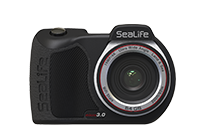
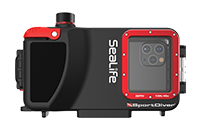
SeaLife presents a new 5 Mega Pixel digital underwater camera with major improvements for sharper and more colorful pictures on land and underwater.
The new SeaLife DC500 is rated to a depth of 200 feet and features a new “Shark Mode” for faster and sharper pictures of moving objects underwater and in sports photography on land.
New Land & Sea exposure modes improve the colors underwater, particularly in low-light conditions with an external SeaLife flash.
The radically new design is not only more compact than any previous underwater camera, but SeaLife’s designers have put a high priority on ease of use, allowing one-button operation, a large 2” LCD, full rubber armoring, and ergonomic button designs. The long-life lithium-ion rechargeable battery is an important feature for divers with multiple dives.
The camera’s new auto focus system is able to focus as close as two inches; and the 12x zoom, (3 x optical and 4 x digital) lets a diver take “close-up” pictures of sea creatures that are either dangerous or shy from a safe distance. The brightness of flash pictures can be adjusted at the camera for close-up or far distances in addition to the brightness control on SeaLife’s new external Digital Flash.
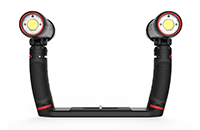
The new SeaLife DC500 is easy to use and easy to expand with external lenses and flashes, which are compatible with all SeaLife film and digital cameras. The most popular expansion lens is a 24 mm wide angle lens offering the greatest versatility.
The camera consists of a shock-proof tough rubber armored housing and a removable inner camera, not larger than a cigarette box, which has been specially made for the light conditions underwater, but can be just as easily used on land, if switched to land mode.
SeaLife’s exclusive new “Shark Mode” has been developed based on input from underwater photographers: Many divers using land cameras in an underwater housing reported fuzzy pictures or missed pictures due to “shutter lag”, the time between pushing the shutter button and the camera actually taking the picture. Shutter lag is caused by the time the camera needs to focus and see the object sharp and clear. Since there is less light and less contrast in water, most land cameras, not specially made for underwater, have a long shutter lag resulting, for example, in a missed fish that moved away. This has been observed to be a particular problem in photographing sharks, which are grey, lacking contrast, and also move along fast. Hence the term “Shark Mode ™”.
The Shark Mode is activated by simply pushing the camera’s OK button which focuses on the intended subject. The camera will now remember that focus range and take sharp pictures with virtually no shutter lag. Underwater, in diving or snorkeling, everything moves, the diver as well as sea creatures are in constant movement. In addition to the Shark Mode, the automatic Sea exposure mode will shorten the exposure time underwater for sharper pictures.
SeaLife, a division of Pioneer Research in Moorestown, New Jersey, has 27 years of experience in underwater photography and started developing digital underwater cameras in 1998. With the expansion to several models of film and digital cameras, the company has become market leader in specialized underwater cameras with a market share of 75 % according to latest reports from Leisure Trends, an independent market research firm.
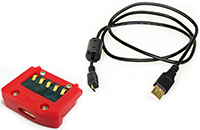
The retail price (MSRP) of the new SeaLife DC500 is $ 549, which includes a docking station, international plugs, a photo editing program, lithium battery, and case.
CONTACT:
Bill Pearse
Linda De Vito
The Graubard Group
(212) 966-0000